
By Jerrel from Dododots, Dododots Product Team. Last updated: 21 Oct 2026.
The best pimple patch is the one that matches your spot, your skin and when you'll wear it. Start with the spot: a plain hydrocolloid patch suits a pimple with a head or one that's already open. Then check size, thickness, added ingredients and the look you want.
If you've never used a patch, read what a pimple patch is and how to use one first. For prices and shops, see our Malaysia pimple patch guide.
What should you look for in a pimple patch?
Check six things: spot type, plain or medicated, size, thickness, look and how sensitive your skin is. The spot matters most, because a plain hydrocolloid patch works best on a pimple that has come to a head or been opened, according to Maitland Dermatology (Oct 2026). The other five decide comfort and look.
| Check | What to look for | Why it matters |
|---|---|---|
| 1. Spot type | Head or opened spot | Plain patches do the most on surface spots |
| 2. Plain or medicated | Plain if your skin reacts easily | Extra ingredients can irritate skin under the patch |
| 3. Size | A patch a little bigger than the spot | The edges need clean skin to stick to |
| 4. Thickness | Thin for day, any for night | Thin edges blend in and lift less |
| 5. Look | Clear, skin-tone or design | Pick by where you're going, not by results |
| 6. Your skin | Sensitive, eczema or rosacea | Adhesive and extras may not suit you |
Which pimple patch is best for each kind of spot?
A plain hydrocolloid patch is the best match for a whitehead or a spot that's opened, since the gel takes up the fluid and keeps fingers off. Patches do little for blackheads, deep cysts or widespread breakouts, according to Everyday Health (Jan 2026) and Maitland Dermatology (Oct 2026). For those, see a pharmacist or dermatologist.
| Spot or situation | Best patch pick | Notes |
|---|---|---|
| Whitehead with a visible head | Plain hydrocolloid | The best-studied use (JAAD trial abstract, 2024) |
| Spot that's opened | Plain hydrocolloid | Covers it while it settles |
| Red bump with no head yet | Plain patch to stop picking, or a microneedle patch | Microneedle evidence is thin (see our patch types guide) |
| Deep, painful cyst | No patch will reach it | A patch only stops you touching it |
| Blackheads | Not a patch job | Skip the patch |
| Lots of spots at once | Not a patch job | Patches cover one spot each |
| Daytime at work or class | Thin, clear or skin-tone | Blends in |
| Night or a day at home | Any plain patch, any design | Comfort first |
Verdict: for most single spots with a head, a plain hydrocolloid patch in the right size is the safe pick.
Should you choose a plain or medicated pimple patch?
Choose plain unless you have a reason not to. Maitland Dermatology (Oct 2026) says no good study shows a patch with salicylic acid or tea tree oil beats a plain hydrocolloid patch. Extras can irritate the skin trapped under the patch, and some people react to tea tree oil.
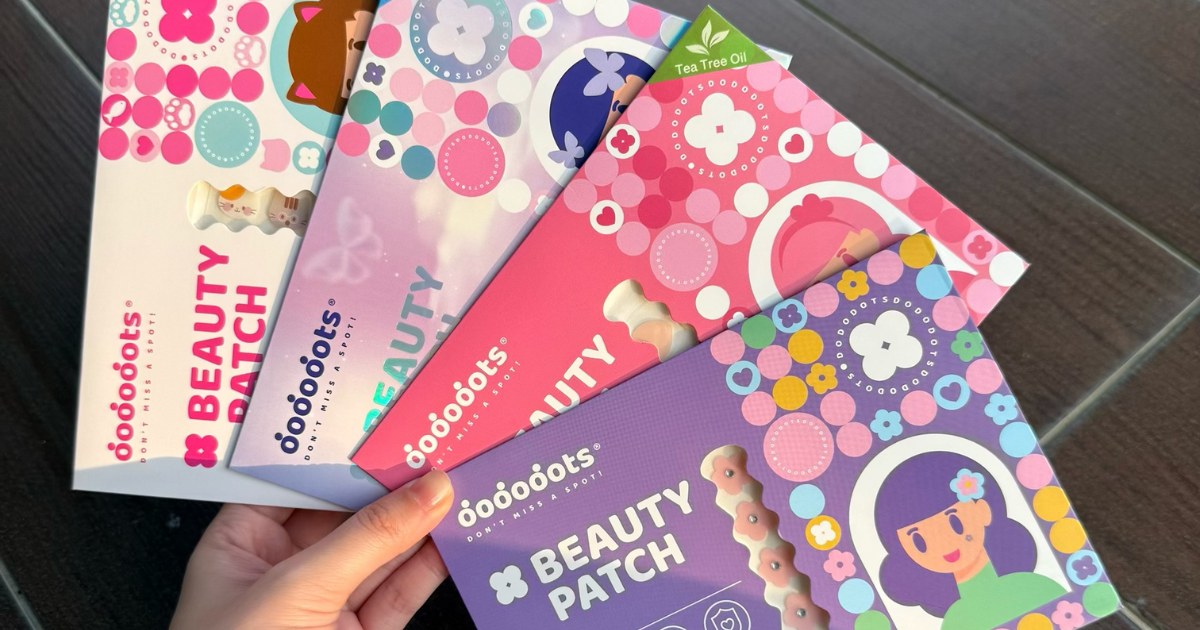
A medicated patch can still suit you if your skin is used to that ingredient. Check the pack: some designs add tea tree oil and some don't. On dododots.com, the product title says "with Tea Tree Oil" when a pack has it, and Butterflies has none.
What size and thickness should you pick?
Pick a patch a little wider than the spot, so the edges sit on clean, dry skin. A pack with two or more sizes covers more kinds of spots. Thin patches with flat edges suit daytime because they blend in and catch less on masks and collars, while thickness matters less at night.
A few size tips:
- Small spots: 6 to 8 mm patches.
- Bigger spots: 10 to 12 mm patches.
- Chin and jaw: smaller patches lift less when you talk.
- Mixed packs: handy if your spots vary.
Sizes here are typical ranges seen on packs, not a rule. Measure by eye: the patch should cover the spot with a small border.
Clear, skin-tone or design: which look is best?
The look doesn't change what the patch does, so choose by where you're going. Clear patches show the least on most skin, skin-tone patches blend in and design patches are made to be seen. Many people keep one of each: a discreet patch for work and a fun one for home.
Skin-tone patches only blend if the shade is close to yours. If a brand offers several shades, compare them to the skin on your jaw in daylight.
Which pimple patch is best for sensitive skin?
If your skin is sensitive, pick a plain patch with no added ingredients and try one first. Everyday Health (Jan 2026) notes that people who react to adhesives, tea tree oil or benzoyl peroxide, or who have eczema or rosacea, may want to avoid patches. Take it off if the skin turns red or itchy.
Don't layer a patch over strong actives like acids or retinoids. The patch traps what's under it, which can make irritation more likely, according to Everyday Health (Jan 2026).
Where do Dododots fit in?
Dododots makes hydrocolloid pimple patches in designs you'd want to show, plus Dodoskin, star patches in five skin-tone shades. Our patches are registered with Malaysia's Medical Device Authority (MDA), and we suggest wearing one for at least 6 to 8 hours.
Prices below are on dododots.com, checked 21 Oct 2026.
| Pack | Best for | What's listed | Price |
|---|---|---|---|
| Dodoskin (with Tea Tree Oil) | Daytime, blending in | 36 star patches, two sizes, 5 shades (Bagel, Peach, Pancake, Chestnut, Espresso) | RM 18 |
| Dodobear (with Tea Tree Oil) | Clear and cute, mixed spot sizes | 36 clear bear patches, 12 x 12 mm and 6 x 6 mm | RM 18 |
| Butterflies | Skin that prefers no tea tree oil | 20 patches, 12 x 12 mm, no tea tree oil | RM 10.50 |
| Pretty in Pink (with Tea Tree Oil) | Wearing it proudly | 20 pink heart patches | RM 15 |
| 8 in 1 Discovery Set | Trying designs first | 8 patches | RM 10 |
Where we're not the pick: if you want the thinnest or cheapest plain patch, or a microneedle patch for a spot with no head, other brands suit you better. See the full range or find us in stores on our locations page.
Frequently asked questions
What is the best pimple patch for a whitehead?
A plain hydrocolloid patch is the usual pick for a whitehead or a spot that's come to a head. The gel takes up fluid from the spot and keeps it covered, so you're less likely to pick at it.
Clean and dry the skin, press the patch on and leave it for 6 to 8 hours or overnight. Swap it when most of the patch has turned white.
Are clear pimple patches better than design ones?
No, not for the spot itself. Clear, skin-tone and design patches can all be hydrocolloid, so the look is about where you're wearing it.
Clear and skin-tone patches suit work or class, and design patches suit days when you're happy to show them. Check the size, the thickness and whether the patch has added ingredients, since those matter more than colour.
Do medicated pimple patches work better?
There's no good evidence that they do. Maitland Dermatology (Oct 2026) says no good study shows patches with salicylic acid or tea tree oil beat plain hydrocolloid ones.
Added ingredients can also irritate the skin under the patch. If you want an active ingredient, a dermatologist guide suggests applying it to the skin and letting it dry first, then using a plain patch separately if you like.
What size pimple patch should I buy?
Buy a size a little wider than your usual spot, so the edges stick to clean skin around it. Many packs mix two sizes, around 6 mm and 12 mm, which covers most spots.
If your spots are small and scattered, a pack with more small patches gives better value. For one bigger spot, a single larger patch beats two overlapping small ones.
Can I use a pimple patch on a cyst or blackhead?
You can, but it won't do much. A patch can't reach a deep cyst, and blackheads need other care, according to Maitland Dermatology (Oct 2026) and Everyday Health (Jan 2026).
A patch over a cyst does keep fingers off, which helps you leave it alone. For painful cysts or lots of blackheads, talk to a pharmacist or dermatologist about other options.
How do I know a pimple patch is working?
The centre of a hydrocolloid patch usually turns white as it takes up fluid. That's a sign it's doing its job on a spot with fluid near the surface.
If the patch stays clear after 6 to 8 hours, the spot may not have a head yet. Read how long to leave a pimple patch on for when to swap it.
Quick recap
- Match the patch to the spot first: plain hydrocolloid for spots with a head or opened spots.
- Choose plain over medicated unless your skin is used to the extra ingredient.
- Pick a size a little wider than the spot.
- Thin, clear or skin-tone for day, any design for night.
- Sensitive skin: plain patch, test one first, take it off if it stings.
Sources
- Maitland Dermatology (Danielle Perna, MD), "Pimple patches: what they can do, what they cannot, and which kind to buy", 12 Oct 2026. https://maitlandderm.com/blog/pimple-patches-what-works/
- Everyday Health (medically reviewed by Jacquelyn Dosal, MD), "When to Not Use a Pimple Patch, and 5 Other Mistakes to Avoid", 7 Jan 2026. https://www.everydayhealth.com/skin-care/pimple-patch-mistakes-to-avoid/
- Journal of the American Academy of Dermatology, "The Science Behind a Viral Trend: Demonstrating Safety and Efficacy of Hydrocolloid Patch for Facial Acne" (abstract 50551), 2024. https://www.jaad.org/article/S0190-9622(24)02377-6/fulltext
- Dododots product pages (Dodoskin, Dodobear, Butterflies, Pretty in Pink, 8 in 1 Discovery Set), checked 21 Oct 2026.


Leave a comment
This site is protected by hCaptcha and the hCaptcha Privacy Policy and Terms of Service apply.