
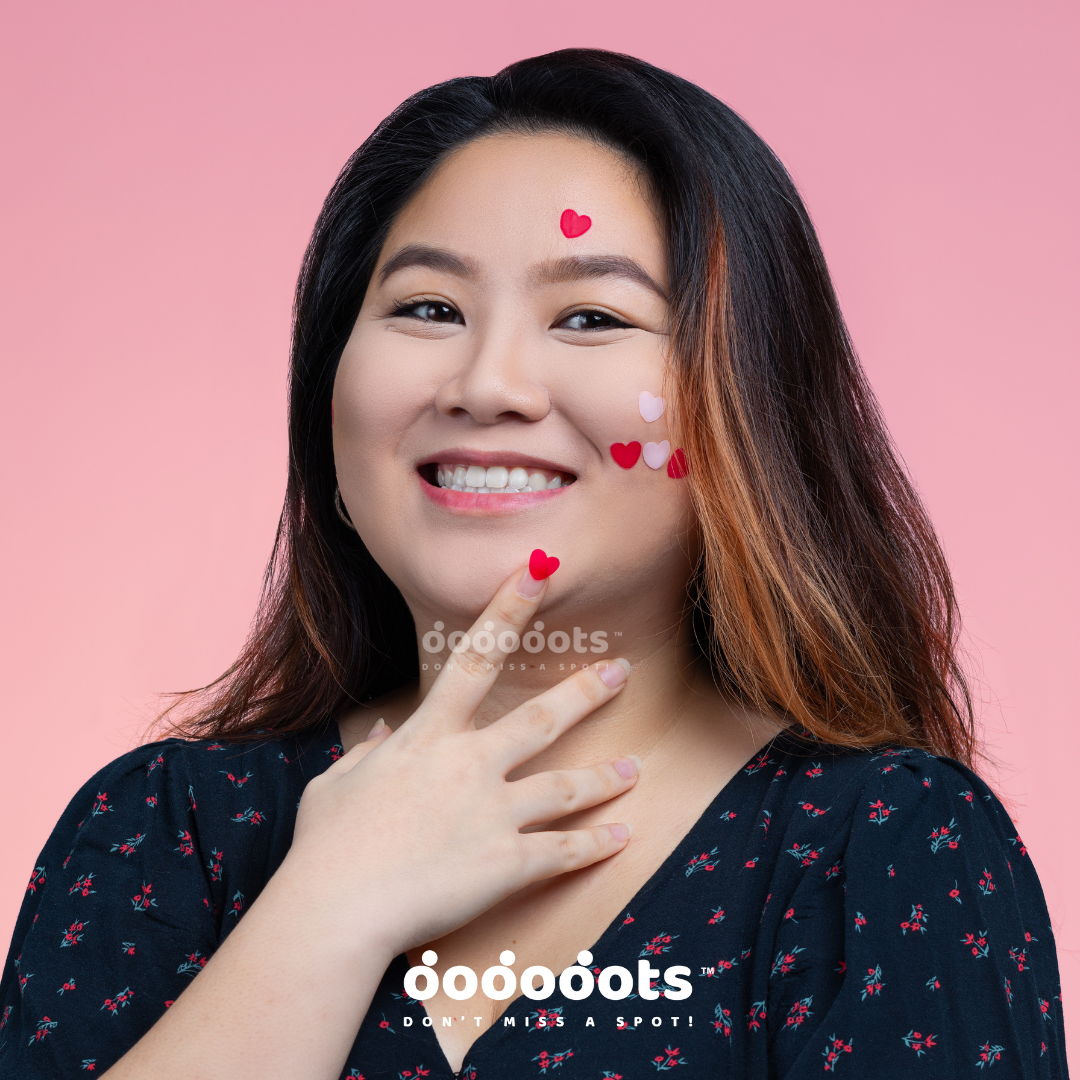
By Jerrel from Dododots, Dododots Product Team. Last updated: 20 Oct 2026.
A pimple patch is a small, sticky sticker you put over a single spot to cover it, soak up fluid and stop you picking. Most are made of hydrocolloid, a gel-forming material borrowed from wound dressings. They suit spots that have a white head or have already popped, and they won't stop new breakouts.
Here's what they do, how to put one on and how long to keep it there.
What is a pimple patch?
A pimple patch is a thin adhesive sticker that sits over one spot. The plain kind uses hydrocolloid, which turns into a soft gel as it takes up fluid from a spot that has come to a head.
It also acts as a little shield, so dirt, makeup and your fingers stay off. Cleveland Clinic describes them as small stickers made with this gummy gel.
Pimple patches grew out of the hydrocolloid wound dressings that doctors started using in the 1970s, according to Cleveland Clinic (Nov 2025). Today they come in clear, skin-tone and fully decorated versions. Same idea, different look.
What is a hydrocolloid patch made of?
A hydrocolloid patch has a thin outer film and a sticky layer made of gel-forming materials. When the sticky layer meets moisture, it swells into a soft white gel. That white bump you see after a night's wear is mostly fluid the gel took up, not "gunk pulled out of your pores", as Dermatology Times points out.
Dermatology Times (Aug 2026) says the "draws out impurities" idea from social media isn't what the evidence describes. The patch soaks up fluid from a spot that's already open or draining, and it keeps the spot covered. That's it, and that's enough for a lot of us.
What types of pimple patches are there?
There are three main types of pimple patches: plain hydrocolloid patches, patches with added ingredients and microneedle (or "microdart") patches. Plain ones absorb fluid and cover the spot.
Ones with added ingredients include extras like tea tree oil or salicylic acid. Microneedle patches have tiny points on one side and are marketed for deeper, early spots.
| Type | What it is | Best for | Things to know |
|---|---|---|---|
| Plain hydrocolloid | Gel-forming sticker, no added ingredients | Spots with a white or yellow head, or popped spots | Has the most published research behind it |
| With added ingredients | Hydrocolloid plus extras such as tea tree oil or salicylic acid | People who like these ingredients and know their skin is fine with them | Extras can irritate sensitive skin, per Cleveland Clinic and The Conversation |
| Microneedle (microdart) | Tiny points on the sticky side | Early spots that haven't come to a head | Less independent research so far |
| Best for most beginners | Plain hydrocolloid | Whiteheads and popped spots | Simplest place to start |
Verdict: start with a plain patch on a spot that has a head, then try other types once you know how your skin reacts.
Do pimple patches work?
Pimple patches do help some spots look better faster, mainly ones with a visible head or ones that were popped. Two small trials found clear changes within one to two days. Most studies so far are small and paid for by brands, so the evidence is promising but still limited, as researchers writing in The Conversation point out.
Here's what the two trials most often quoted found:
| Study | People | Length | Funded by | What it found |
|---|---|---|---|---|
| Randomised trial of an overnight hydrocolloid patch (JAAD abstract, 2024; ClinicalTrials.gov NCT05012735) | 41, aged 12 to 35 | 14 days | Johnson & Johnson Consumer Inc. | Popped spots looked noticeably better from day 1. Closed spots got smaller by day 4, but the change was smaller. |
| Open-label trial of an unmedicated concealing patch (summed up in The Conversation, Sep 2026) | 37 | 10 days | Industry | By day 2, covered spots were 35% smaller and looked 44% less inflamed. Fewer dark marks by day 10. |
So patches look best on spots near the surface. They aren't a fix for deep, painful lumps, blackheads or ongoing acne, and Cleveland Clinic (Nov 2025) says they can't stop breakouts from coming back.
Which pimples are pimple patches good for?
Pimple patches suit spots with a visible white or yellow head and spots you've already popped, because the fluid sits near the surface where the gel can reach it. They do less for closed bumps and little for blackheads or deep, sore lumps. Those sit too deep for a flat sticker to reach, per The Conversation.
| Spot | Does a patch suit it? | Why |
|---|---|---|
| Whitehead with a visible head | Yes | Fluid is close to the surface |
| Popped or picked spot | Yes | It's open, and the patch keeps it covered |
| Red bump with no head | Somewhat | Smaller changes in trials |
| Blackhead | Rarely | It's a clogged pore, nothing for the gel to take up |
| Deep, painful lump (cyst or nodule) | No | Too deep for a flat patch |
If you get lots of deep, painful or scarring spots, see a doctor or dermatologist. A patch is for the odd spot, not a whole-face plan.
How do you use a pimple patch?
Here's how to use a pimple patch: wash and dry the area, pick a patch slightly bigger than the spot, press it on with clean, dry fingers and leave it alone. Take it off once the centre turns white and puffy, usually after 6 to 8 hours or overnight. Then bin it, because patches are single-use.
- Wash your hands and face. Use your usual gentle cleanser on the spot.
- Dry the skin fully. Adhesive won't grip damp skin or skin with oil or serum on it.
- Pick the right size. The patch should cover the whole spot with a small border around it.
- Peel without touching the sticky side. Lift it from the edge so your fingers don't leave oil on it.
- Press it down for a few seconds. Smooth the edges so they don't lift.
- Leave it alone. Sleep in it, or wear it through the day.
- Peel off slowly. Hold the skin next to it and lift from one edge.
- Bin it. Use a fresh patch if the spot still has fluid in it.
Always check the instructions on your pack too, since brands differ.
How long should you leave a pimple patch on?
Leave a pimple patch on for about 6 to 8 hours, or overnight, then swap it once the middle turns cloudy and swollen. That's the guidance in The Conversation (Sep 2026).
Cleveland Clinic adds that most patches need a few hours and many are made to be worn while you sleep. For Dododots patches, we recommend at least 6 to 8 hours, but your pack's instructions come first. Here's more on how long to leave a pimple patch on.
A quick way to tell it's time:
- Clear or skin-tone patch: the centre goes white or opaque.
- Decorated patch: check the edges, which lift as the gel swells.
- No change after a night: the spot may not have a head yet, so a patch may not do much.
Can you wear a pimple patch under makeup?
Yes, you can wear a thin pimple patch under makeup, but stick it on first, on bare, dry skin. Then pat foundation or concealer gently over the top rather than rubbing. Thin, matte or skin-tone patches hide best, and putting serum or moisturiser under the patch will make it slide off.
Or skip hiding it entirely. A lot of people wear decorated patches on purpose, as a little face sticker. Which brings us to us.
Where do Dododots fit in?
Dododots is a Malaysian brand that makes hydrocolloid pimple patches in designs you'd want to show off: hearts, butterflies, bears, flowers and characters. The idea is simple. If you're wearing a patch anyway, it might as well be cute.
Pack details below come from dododots.com, checked on 20 Oct 2026.
| Pack (live product page) | What's listed | Price on dododots.com (20 Oct 2026) |
|---|---|---|
| Dodobear (with Tea Tree Oil) | 36 clear bear-shaped patches in two sizes (12 x 12 mm and 6 x 6 mm) | RM 18 |
| Pretty in Pink (with Tea Tree Oil) | 20 pink heart patches, our first design | RM 15 |
| Butterflies | 20 patches, two butterfly designs (12 x 12 mm) | RM 10.50 |
| Dodoskin (with Tea Tree Oil) | 36 star patches, two sizes, 5 skin-tone shades | RM 18 |
| 8 in 1 Discovery Set | 8 patches, for trying a few before you commit | RM 10 |
Some of our packs include tea tree oil and some don't, and each page says which. If your skin is sensitive, start with a version without it and try one patch first.
You can browse the full range or find us in Malaysia at Watsons, Guardian, CARiNG Pharmacy, 7-Eleven, FamilyMart and Miniso. Check the store locations page for the latest list, or compare brands and prices in our guide to the best pimple patches in Malaysia.
Are pimple patches safe for everyone?
Pimple patches don't suit everyone. If you're sensitive or allergic to adhesives, a patch can cause redness, itching or a rash, and added ingredients like tea tree oil or salicylic acid can irritate. People with deeper skin tones may get more noticeable dark marks if the skin gets irritated, per The Conversation (Sep 2026).
Try one patch on a small area first. Take it off if it stings, itches or turns the skin red, and don't put patches on broken skin that's badly irritated (beyond a popped spot) or near your eyes.
What not to do with a pimple patch
A few habits make patches less useful or more annoying.
- Don't reuse a patch. Once it's gone white, it's done.
- Don't stick it over moisturiser or serum. It won't stay put.
- Don't rip it off fast. Peel slowly so you don't tug the skin.
- Don't expect it to stop breakouts. It covers one spot at a time.
- Don't squeeze first just to use a patch. Picking can leave marks.
Frequently asked questions
What does a pimple patch do?
A pimple patch covers a single spot, takes up fluid from it if the spot has a head or has been popped, and keeps fingers, dirt and makeup off. Plain hydrocolloid patches don't contain added ingredients.
Their job is to soak up and protect. Two small trials found spots covered by patches looked smaller and calmer within one to two days, though both trials were funded by companies.
Do pimple patches work on blind pimples?
Plain hydrocolloid patches don't do much for blind pimples, the deep, sore bumps with no head. The gel can only reach fluid near the surface, so there's nothing for it to take up yet. Some brands make microneedle patches for early spots, but there's less independent research on them (see hydrocolloid vs microneedle patches).
A patch still stops you picking, which helps. If deep spots keep coming back, see a doctor.
How long should you leave a pimple patch on?
Most guidance says about 6 to 8 hours, or overnight. The Conversation (Sep 2026) suggests swapping the patch once its centre turns cloudy and swollen.
If it's still clear the next morning, the spot may not have had a head yet. Always follow the time on your pack first, because different brands and sizes are made for different wear times.
Can I reuse a pimple patch?
No. A pimple patch is single-use. Once you peel it off, the adhesive loses its grip and the gel has already taken up what it can.
Sticking it back on can also move fluid and bacteria around. Bin it and use a fresh patch if the spot still needs covering, and wash your hands before you put the new one on.
Can I pop a pimple and then put on a patch?
Cleveland Clinic's Dr. Kassouf says it's best not to pick or pop. If you already have, a patch is a good next step.
Clean the area gently, dry it and put a patch on to cover it. Cleveland Clinic (Nov 2025) says patches work best on open spots and help keep your fingers away while the skin settles.
Can I wear a pimple patch during the day?
Yes. Thin, clear or skin-tone patches blend in under makeup, and decorated ones are meant to be seen.
Put the patch on clean, dry skin before any makeup and pat products over it gently. If you're out in the sun, wear sunscreen around the patch as usual, and swap the patch if the edges start lifting.
Are pimple patches the same as hydrocolloid bandages?
They use the same kind of gel. Pimple patches are smaller, thinner and shaped for faces, while hydrocolloid bandages are larger and made for blisters and scrapes.
Cleveland Clinic notes pimple patches grew out of hydrocolloid wound dressings from the 1970s. Some people cut a sheet to size, but face patches are easier to place and blend in better.
Quick recap
- A pimple patch is a small sticker that covers a spot and soaks up fluid.
- It suits spots with a head and popped spots, not blackheads or deep lumps.
- Wash, dry, stick, leave on 6 to 8 hours or overnight, then bin it.
- Evidence is promising but small, and most trials were brand-funded.
- Try one patch first if your skin is sensitive.
This sucks so good.
Sources
- Cleveland Clinic, "How Do Pimple Patches Work?", 28 Nov 2025. https://health.clevelandclinic.org/how-do-pimple-patches-work
- The Conversation, "Do pimple patches actually work? Here's what the science says", Sep 2026. https://theconversation.com/do-pimple-patches-actually-work-heres-what-the-science-says-288201
- Dermatology Times, "Social Media Mythbusters: Hydrocolloid Pimple Patches", 15 Aug 2026. https://www.dermatologytimes.com/view/social-media-mythbusters-hydrocolloid-pimple-patches
- Journal of the American Academy of Dermatology, "The Science Behind a Viral Trend: Demonstrating Safety and Efficacy of Hydrocolloid Patch for Facial Acne" (abstract 50551), 2024. https://www.jaad.org/article/S0190-9622(24)02377-6/fulltext
- ClinicalTrials.gov, "A Study of a Hydrocolloid Bandage on Pimples" (NCT05012735), completed Sep 2021. https://clinicaltrials.gov/study/NCT05012735
- University Hospitals, "Are Pimple Patches Really a Quick Fix for Acne?", 11 Sep 2025. https://www.uhhospitals.org/blog/articles/2025/09/are-pimple-patches-really-a-quick-fix-for-acne


Leave a comment
This site is protected by hCaptcha and the hCaptcha Privacy Policy and Terms of Service apply.