

By Jerrel from Dododots, Dododots Product Team. Last updated: 28 Oct 2026.
Pimple patches for sensitive skin can work well, but they don't suit everyone. Pick a plain hydrocolloid patch with no added ingredients, try one on a single spot first and put it on clean, dry skin. Peel it off if the skin under it turns red, itchy or sore.
If you've never used a patch, start with what a pimple patch is and how to use one.
Are pimple patches OK for sensitive skin?
Often, yes, if you pick a plain patch and test it first. Maitland Dermatology (Oct 2026) says medicated patches haven't been shown to beat plain ones and their extra ingredients can irritate the skin under the patch. Its advice is to stop if the skin turns red or itchy, which is usually the adhesive or an added ingredient.
Not every dermatologist is as relaxed. In Everyday Health (Jan 2026), dermatologist Dr Lamb says anyone who gets irritation from adhesives or active ingredients, or allergic reactions to tea tree oil or benzoyl peroxide, should avoid pimple patches. She adds people with eczema or rosacea to that list.
So "sensitive skin" isn't one group. If your skin stings with new skincare now and then, a plain patch and a test is a fair start. If you've reacted to plasters or tape before, or have eczema or rosacea, check with a pharmacist or dermatologist first.
What makes a pimple patch irritate sensitive skin?
Four things cause most reactions: the adhesive, added ingredients, products trapped under the patch, and how long and how roughly the patch is worn and removed. The hydrocolloid gel is rarely the main suspect. Here's what each one looks like and what to change.
| Cause | What's going on | What to change |
|---|---|---|
| Adhesive | The sticky layer can cause redness, itching or a rash if you're sensitive or allergic to adhesives (The Conversation, Sep 2026) | Stop using that patch. Try a different brand only after the skin settles |
| Added ingredients | Extras like tea tree oil or salicylic acid can irritate skin trapped under the patch (Maitland Dermatology, Oct 2026) | Switch to a plain patch with nothing added |
| Actives underneath | A patch traps what's under it, which can make acids or retinoids more irritating (Everyday Health, Jan 2026) | Patch bare, dry skin. Use actives on other nights |
| Wear and removal | Leaving a full patch on longer than needed can irritate sensitive skin (Everyday Health, Jan 2026), and ripping it off pulls at the skin | Swap it once most of it turns white and peel it off slowly |
What's behind adhesive reactions? A 2025 review of 73 wound dressings in the International Wound Journal found hydrocolloid dressings were among the more likely to cause allergy, mostly from adhesive ingredients such as colophony (rosin) derivatives. Dressings aren't pimple patches, but it shows why the sticky layer is the first thing to suspect.
What should you look for in a pimple patch for sensitive skin?
The best pimple patches for sensitive skin are plain hydrocolloid ones with no added actives, in a size a little bigger than your spot. Check the pack and product page for tea tree oil, salicylic acid or fragrance. Don't trust a "gentle" label alone: the only real test is how your own skin reacts to that patch.
- Plain over medicated: no tea tree oil, salicylic acid or other actives, unless your skin is already used to them.
- Ingredients you can read: if a brand lists the adhesive and you know you react to rosin or acrylates, skip it.
- Right size: a patch a little wider than the spot, so the edges sit on clear skin and don't need to be pressed hard.
- Thin edges: they lift less, so you're not re-pressing and re-peeling them through the day.
- Single spots only: patches are made for one spot each, not for covering lots of irritated skin.
For the full method, see how to choose the best pimple patch.
How do you test a pimple patch if your skin is sensitive?
Wear one patch on one spot before you use several. Put it on clean, dry skin for at least 6 to 8 hours or overnight, then peel it off slowly and check the skin in daylight. If it's calm, use the pack as normal, and if it's red, itchy or bumpy where the patch sat, stop.
- Pick one spot: a single pimple with a head, not a cluster and not near your eyes.
- Clean and dry: wash, pat dry and wait a minute so the skin is fully dry.
- One patch: press it on and hold the edges for a few seconds.
- Wear it: leave it on for at least 6 to 8 hours. Here's more on how long to leave a pimple patch on.
- Peel slowly: lift one edge and peel it back low and slow, holding the skin next to it.
- Check: look at the skin where the edges sat. A faint pink mark that fades within an hour or so is usually from peeling. Itch, a raised red ring or tiny bumps aren't.
Testing a new brand? Do the one-patch test again, even if another brand was fine. Adhesives and extras differ from patch to patch.
How do you use a pimple patch on sensitive skin?
Keep everything under the patch simple. Cleanse, dry the spot fully, patch it, then do the rest of your routine around it. Don't put acids, retinoids or thick creams under it, and peel it off slowly once most of it has turned white.
- Bare skin only: nothing goes under the patch. Here's where a pimple patch goes in your skincare routine.
- Actives on other nights: if you use a retinoid or acid, use it on nights you're not patching that area.
- Give the skin a break: after you peel a patch off, let the skin rest before you put a fresh one on the same place.
- Overnight is easiest: you're not touching it or re-pressing it. Here's how to sleep with a pimple patch on.
- Warm water helps: if a patch is stuck firmly, a warm, damp cloth for a few seconds loosens the edges.
Dry and sensitive skin? Put moisturiser around the patch, not under it.
Oily and sensitive skin? Cleanse well so the patch sticks the first time, since re-sticking a lifted patch means more pulling.
What does a red ring, itch or rash under a pimple patch mean?
A red ring that matches the patch's shape, itching, or tiny bumps where the patch sat usually mean your skin is reacting to the patch, not the pimple. Maitland Dermatology (Oct 2026) says it sees this in clinic as a red ring where the patch sat. Stop using that patch and let the skin settle.
| What you see after peeling | What it likely means | What to do |
|---|---|---|
| Faint pink mark that fades within an hour | Pressure or peeling | Keep going. Peel more slowly next time |
| Red ring or square matching the patch edge | Reaction to the adhesive or an added ingredient | Stop that patch. Don't patch that area until it settles |
| Itchy skin or tiny bumps under the patch | Possible irritation or allergy | Stop. See a pharmacist or doctor if it spreads or lasts |
| Dry, flaky square | Irritation from wear, or from actives trapped underneath | Leave actives off that spot. Shorter wear on that area |
| Dark mark weeks later | Pigment left after irritation or the pimple itself | Protect the area from sun. See a dermatologist if it lingers |
| Swelling, blisters or a rash beyond the patch | Stronger reaction | Stop and get medical advice |
People with deeper skin tones may want to be extra careful. The Conversation (Sep 2026) notes that irritation can raise the risk of dark marks, and on skin with more melanin those marks are often more noticeable and slower to fade.
When should you skip pimple patches?
Skip them if you've reacted to plasters, tape or adhesive bandages before, if you've reacted to the patch's added ingredients, or if the skin is broken, raw or flaring. Everyday Health (Jan 2026) also lists eczema and rosacea as reasons to avoid them, so check with a dermatologist first.
- Known adhesive allergy: patches can cause redness, itching or a rash (The Conversation, Sep 2026).
- Eczema or rosacea: ask a dermatologist before trying one.
- Skin that's already irritated: wait until it's calm.
- Near the eyes: the skin there is thinner. Keep patches on the spot itself.
- Lots of spots or deep, painful lumps: a patch won't reach those. Here's which spots pimple patches work on.
If breakouts keep coming back, a patch only covers one spot at a time. See pimple patch vs spot treatment for when something else makes more sense.
For younger skin, here's more on pimple patches for teens.
Where do Dododots patches fit if your skin is sensitive?
Dododots patches are hydrocolloid, and they're registered with Malaysia's Medical Device Authority (MDA). We suggest wearing one for at least 6 to 8 hours. Some of our packs include tea tree oil and some don't, and each product page says which.
If you'd rather start without tea tree oil, Butterflies has none. Packs that include it, like Dodoskin, Dodobear and Pretty in Pink, say "with Tea Tree Oil" in the product name. Details below are from dododots.com, checked 28 Oct 2026.
| Pack | Tea tree oil | What's listed | Price |
|---|---|---|---|
| Butterflies | No | 20 butterfly patches, 12 x 12 mm | RM 10.50 |
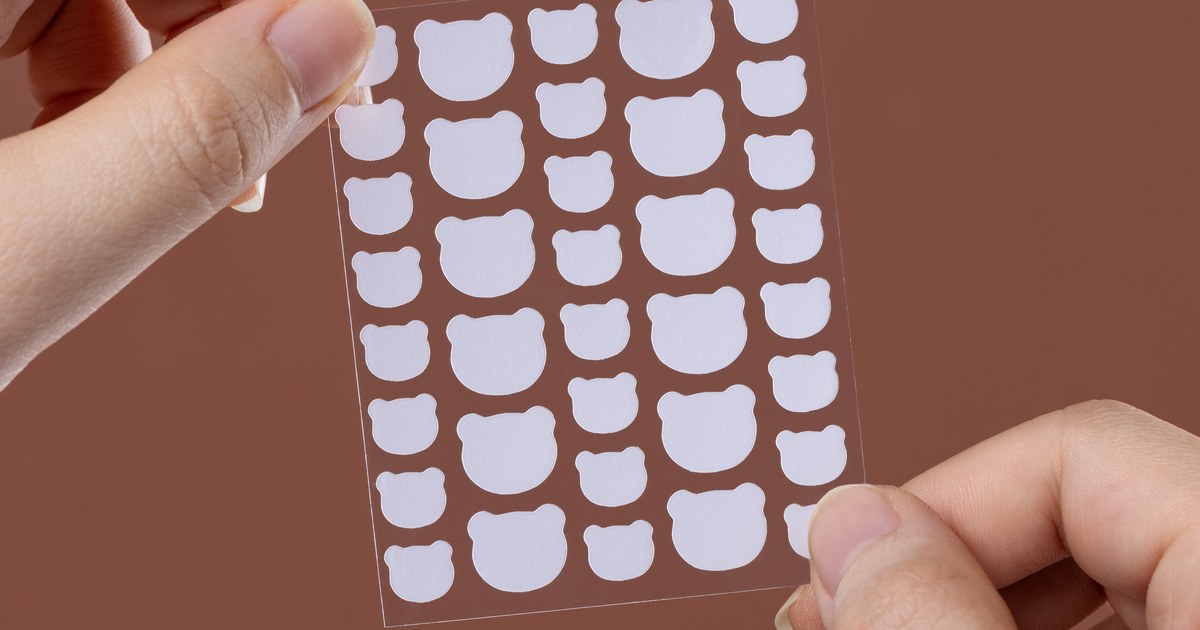
| Dodobear (with Tea Tree Oil) | Yes | 36 clear bear patches, 12 x 12 mm and 6 x 6 mm | RM 18 |
| Dodoskin (with Tea Tree Oil) | Yes | 36 star patches, two sizes, 5 skin-tone shades | RM 18 |
| Pretty in Pink (with Tea Tree Oil) | Yes | 20 pink heart patches | RM 15 |
Whichever pack you choose, test one patch first and stop if your skin reacts. No patch suits every skin, ours included. See the full range.
Frequently asked questions
Are pimple patches safe for sensitive skin?
Many people with sensitive skin use them without trouble, but some react. The Conversation (Sep 2026) says that if you have sensitive skin or an allergy to adhesives, patches can cause redness, itching or a rash.
Start with a plain patch on one spot, wear it for at least 6 to 8 hours and check the skin after. Stop if it itches or leaves a red ring.
What is the best pimple patch for sensitive skin?
A plain hydrocolloid patch with no added actives is the usual starting point. Maitland Dermatology (Oct 2026) says no good study shows medicated patches beat plain ones, and the extras can irritate.
The best one for you is the one your skin doesn't react to. That's why a one-patch test matters more than any label.
Is hydrocolloid itself an allergen?
It's not usually the first suspect. A 2025 review in the International Wound Journal found allergy to hydrocolloid dressings was most often linked to adhesive ingredients such as colophony (rosin) derivatives, though some people react to other parts too.
If you react to one brand, the cause may be its adhesive or extras rather than hydrocolloid in general. Let your skin settle before trying another, and test that one too.
Are tea tree oil pimple patches OK for sensitive skin?
Some sensitive skin is fine with them and some isn't. If you've reacted to tea tree oil before, choose a pack without it.
If you like tea tree oil and your skin is used to it, test one patch first as usual. Here's more on tea tree oil pimple patches.
Why is my skin red after taking off a pimple patch?
A faint pink mark that fades soon after is often from peeling. A red ring that matches the patch's edge, or redness that itches, is more likely a reaction to the adhesive or an added ingredient.
Stop using that patch on that area and let the skin calm down. If it spreads, blisters or lasts more than a few days, see a pharmacist or doctor.
Can I use a pimple patch with retinol or acids?
Not on the same spot at the same time if your skin is sensitive. Everyday Health (Jan 2026) says a patch can trap actives under it and make irritation more likely.
Use actives on other nights or on other areas, and keep the patched spot bare. Here's where a pimple patch goes in your skincare routine.
Are microneedle patches OK for sensitive skin?
They're a different product, with tiny points instead of a flat gel. If your skin reacts easily, start with a plain hydrocolloid patch and see how it goes first.
Here's how the two compare: hydrocolloid vs microneedle pimple patches.
Quick recap
- Many people with sensitive skin can use pimple patches, but not everyone.
- Pick a plain hydrocolloid patch with nothing added, a little wider than the spot.
- Test one patch on one spot before using more, and test again with each new brand.
- Keep acids, retinoids and creams out from under the patch, and peel it off slowly.
- Stop if you see a red ring, itch or bumps, and check with a dermatologist if you have eczema, rosacea or an adhesive allergy.
Sources
- Maitland Dermatology (Danielle Perna, MD), "Pimple patches: what they can do, what they cannot, and which kind to buy", 12 Oct 2026. https://maitlandderm.com/blog/pimple-patches-what-works/
- Everyday Health (medically reviewed by Jacquelyn Dosal, MD), "When to Not Use a Pimple Patch, and 5 Other Mistakes to Avoid", 7 Jan 2026. https://www.everydayhealth.com/skin-care/pimple-patch-mistakes-to-avoid/
- The Conversation via ABC News (Lisa Byrom, University of Queensland), "Do pimple patches actually work? Here's what the science says", 20 Sep 2026. https://www.abc.net.au/news/2026-09-20/do-pimple-patches-actually-work-what-the-science-says/107167316
- Küçük K, Van Gysel J, del Marmol V, White JML, "Allergic Contact Dermatitis Induced by Modern Wound Dressings: A Comprehensive Analysis of Risks and Allergenic Components", International Wound Journal, 11 Mar 2025. https://pmc.ncbi.nlm.nih.gov/articles/PMC11896758/
- Dododots product pages (Butterflies, Dodobear, Dodoskin, Pretty in Pink), checked 28 Oct 2026.


Leave a comment
This site is protected by hCaptcha and the hCaptcha Privacy Policy and Terms of Service apply.